You don’t need a $60,000 Tesla to drive smart. The right gadgets can turn any ordinary car into a safer, more connected, more enjoyable daily ride — all for under $200 total.
Here’s the honest truth: most car owners are sitting in vehicles that are two software updates and three gadgets away from feeling completely modern. Car manufacturers charge thousands for features you can add yourself for the price of a dinner out.
Whether you’re commuting 40 minutes every morning, doing school runs, or clocking rideshare miles — the right affordable car tech genuinely changes your daily experience. This guide cuts through the noise and focuses on what’s actually useful in the real world.
Why You Don’t Need to Buy a New Car
The average new car in 2026 costs over $48,000. Yet the features people actually care about — navigation, hands-free calling, dash protection, backup cameras — are all available as standalone gadgets for a fraction of that.
A 2018 sedan with a $60 dashcam and a $30 wireless charger mount is genuinely more practical on your commute than it was when it left the dealership. That’s the power of affordable car tech.
What to Look for Before Buying
- Compatibility: Will it work with your car’s existing ports, dash layout, or phone’s operating system?
- Build quality: Cheap doesn’t have to mean flimsy. Check materials and mount stability.
- Installation time: The best budget gadgets are plug-and-play or magnetic — no tools required.
- User reviews: Real-world experience beats spec sheets. Look for 500+ verified reviews before buying.
12 Best Affordable Car Tech Gadgets for Daily Use
Your silent witness on the road. A dashcam records everything in front of you — and sometimes behind. In an accident or road rage incident, footage is worth more than any witness statement. Modern budget dashcams like the Vantrue E1 Lite record in 1080p, loop seamlessly, and park in monitor mode. Some even have built-in GPS to timestamp locations. For around $45–$70, this is the single most protective purchase you can make.
That check engine light doesn’t have to cost $100 at the mechanic just to read. A Bluetooth OBD2 dongle plugs into your car’s diagnostic port (under the dash) and talks to a free app on your phone. You can read fault codes, clear warnings, and track live engine data like RPM, coolant temp, and fuel economy. The BAFX or Veepeak mini adapters do this well. Buy this once, use it forever.
$30 – $55 Safety
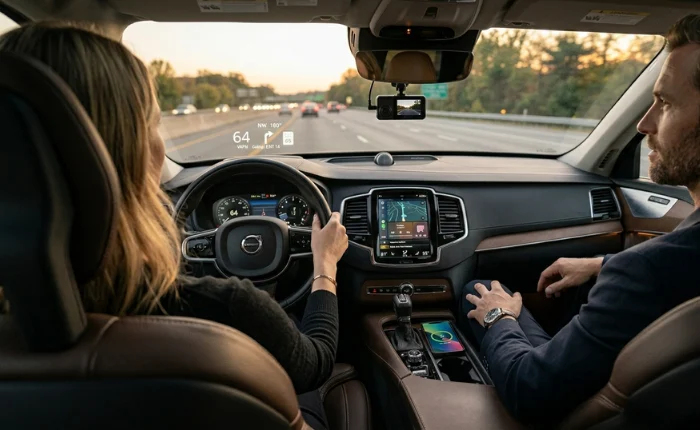
A HUD projects your speed, navigation arrows, and alerts onto a small screen on your dash or directly onto the windshield — keeping your eyes forward. GPS-based models under $40 work with any car. OBD2-based HUDs pull live engine data too. They’re especially useful on highways and unfamiliar routes. It feels like a luxury car feature, but the EONON H01 and similar units prove you don’t need to spend big.
$30 – $50 Safety
Under-inflated tires are one of the leading causes of blowouts and poor fuel economy — and most drivers never check until it’s too late. External TPMS sensors screw onto each valve stem and beam real-time pressure and temperature to a small display on your dash. The Tymate M12-3 covers all four tires and alerts you when pressure drops. At around $35, it’s genuinely one of the safest investments on this list.
If your car didn’t come with a rear camera, you can add a wireless one in 20 minutes. Stick the camera above your license plate, clip a small monitor to your dash or sun visor, and you instantly gain a clear rear view when reversing. Great for tight parking lots and urban spaces. Wireless models under $50 have become remarkably reliable — look for ones with night vision and wide-angle lens for the best daily use results.
If your car has wired CarPlay or Android Auto, you can go wireless for under $60. Dongles like the Carlinkit 5.0 or AAWireless plug into your car’s USB port and connect to your phone over Wi-Fi — no cable needed. Your maps, music, and messages appear on your factory screen instantly. It’s one of those upgrades you’ll wonder how you ever lived without. The connection is near-instant after first setup.
City commuters inhale more pollutants inside their cars than outside — especially in traffic. A compact HEPA-filter air purifier sits in your cup holder, draws in cabin air, and removes dust, pollen, smoke particles, and VOCs. Models from Philips and MOOKA work quietly and cost under $40. If you drive with kids, have allergies, or commute in heavy traffic daily, this small device genuinely improves your daily well-being.
Stick-on convex blind spot mirrors and clip-on LED warning sensors cost next to nothing but prevent serious accidents. Sensor kits detect objects in your blind zone and flash a warning light on your mirror when you signal. Basic stick-on blind spot mirrors run under $10. Sensor-based systems run up to $35 and work on most sedans and SUVs with no drilling required. Low cost, high impact on road safety every single day.
A dead battery in a car park with no other vehicles around is a helpless feeling. A compact jump starter like the NOCO Boost Plus GB40 fits in your glove box and jump-starts your car without needing another vehicle. It also works as a 12,000mAh power bank for your devices. One charge lasts months in standby. Under $70 and the kind of thing you hope never to need — but will be incredibly glad you have when you do.
A discreet GPS tracker hidden in your car gives you peace of mind against theft and helps track a family member’s journey. Devices like the LandAirSea 54 or Apple AirTag (with mount) update location every few seconds. Hardwired OBD2 trackers like the Bouncie work on monthly subscriptions but send instant alerts if your car moves unexpectedly. For parents tracking new teen drivers or fleets of delivery vehicles, the value is clear.
Which Car Tech Should You Buy First?
Best for Safety
- Dashcam
- TPMS Sensor
- Backup Camera
- Portable Jump Starter
- Blind Spot Sensors
Best for Convenience
- Wireless Charger Mount
- CarPlay Adapter
- HUD Display
- Car Air Purifier
- Bluetooth FM Transmitter
Best for Old Cars
- FM Transmitter
- OBD2 Scanner
- Wireless Backup Camera
- GPS Tracker
- Blind Spot Mirrors
Are Cheap Car Gadgets Actually Reliable?
The honest answer: it depends on the category. Some gadgets are nearly impossible to mess up at any price — a phone mount is a phone mount. But others, like dashcams and OBD2 scanners, have a real quality floor below which you’ll be disappointed.
General rule: spend $40+ on anything related to safety (dashcam, jump starter, TPMS). For pure convenience items, the $15–$25 range often delivers 80% of the experience at 30% of the price.
Always check for: a minimum 12-month warranty, genuine user reviews with photos, and a brand with a support email. Avoid no-name listings with fewer than 100 reviews for safety-adjacent products.
Final Thoughts
Affordable car tech for daily use has never been more accessible or more capable. The gap between a budget gadget and a factory-fitted feature has essentially closed for most practical purposes.
The smartest approach is to start with safety — a dashcam, then a TPMS sensor or jump starter. Then move to convenience: wireless charger mount and Bluetooth audio. After that, explore the tech add-ons like an OBD2 scanner or HUD as your budget allows.
You don’t need a new car. You need the right $60 gadget in the right place. Start small, drive smarter.